


Description
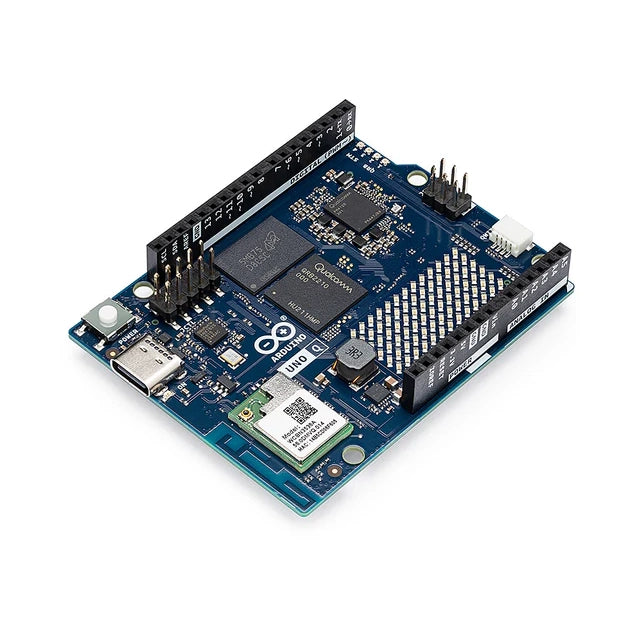
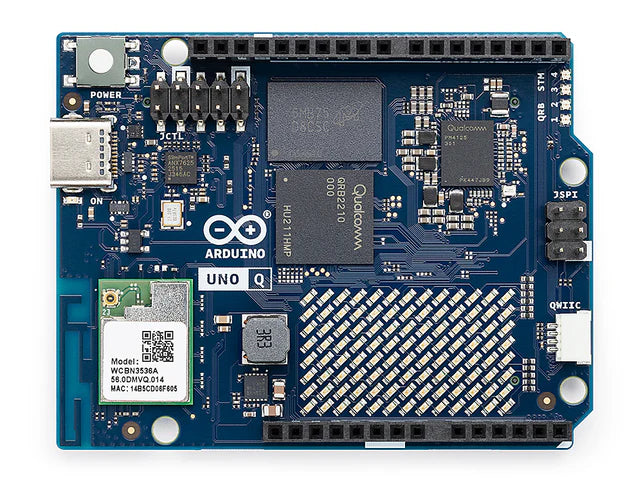
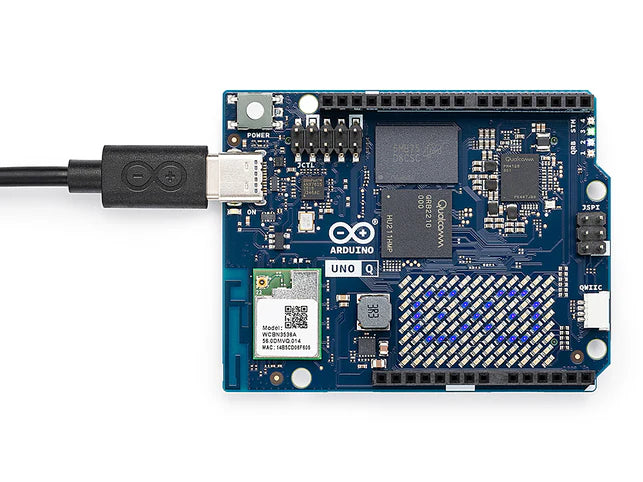
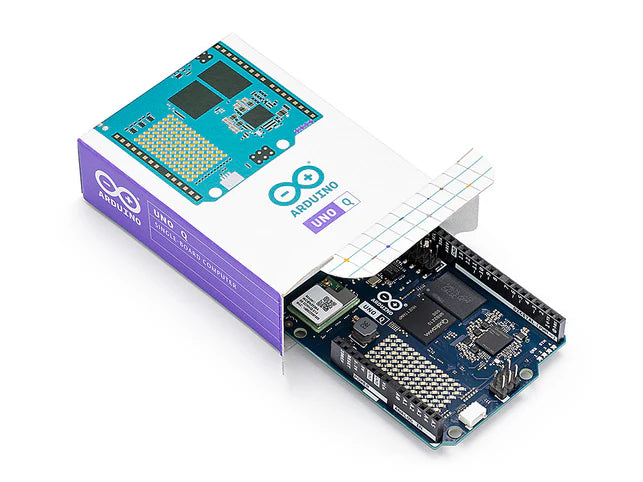
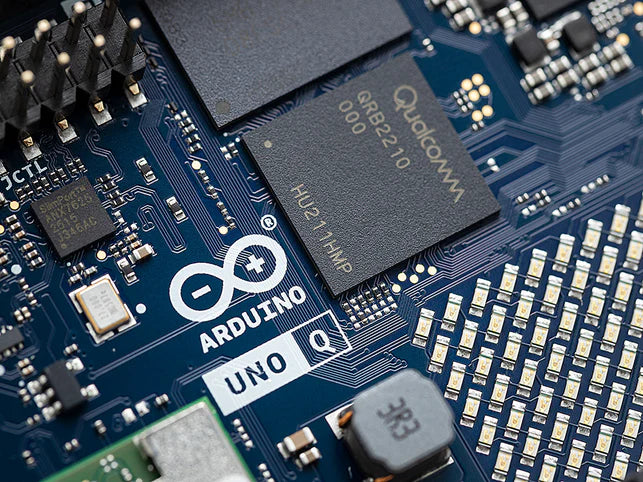
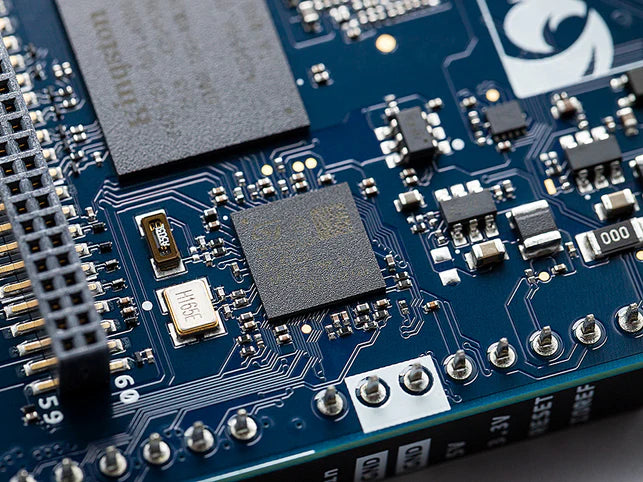
The Arduino Uno Q (2 GB RAM) is a next-generation hybrid development board that combines a full Linux® computing environment with real-time microcontroller capabilities, all in the familiar UNO footprint. Featuring a powerful dual-brain architecture, it empowers both makers and professionals to tackle everything from embedded control to edge AI and IoT applications.
Key Features
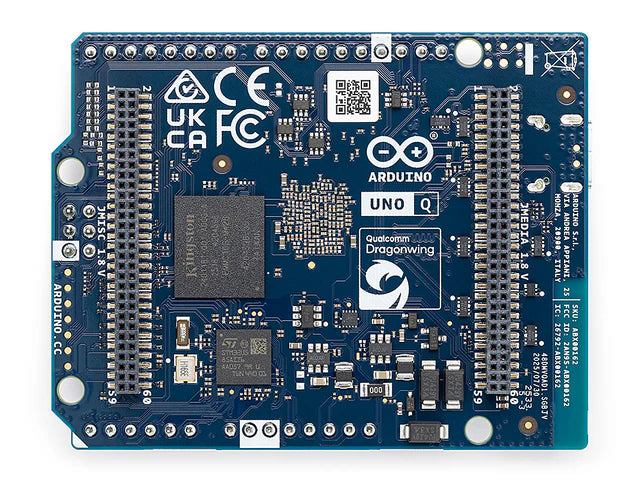
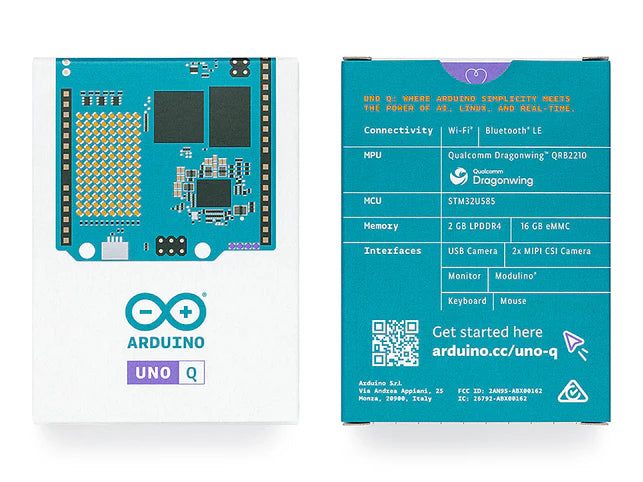
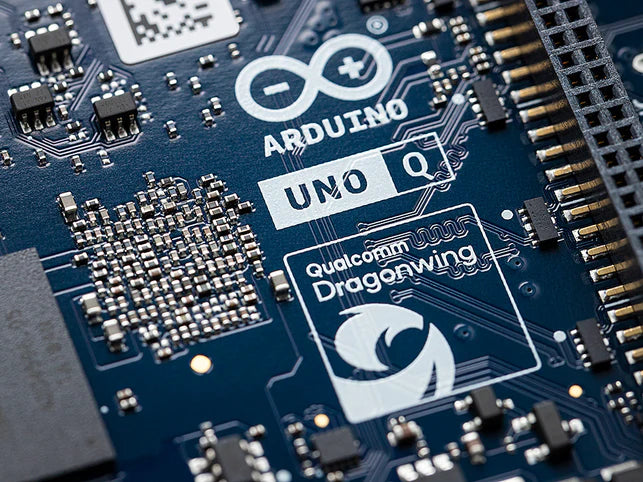
- Hybrid architecture: quad-core Qualcomm Dragonwing™ QRB2210 MPU + real-time STM32U585 MCU for unmatched flexibility.
- 2 GB LPDDR4 RAM and 16 GB eMMC storage in the 2 GB variant, ideal for intensive compute, Linux, containers and AI workloads.
- Built-in dual-band Wi-Fi 5 (2.4/5 GHz) and Bluetooth 5.1 for connectivity without the need for add-on modules.
- Full compatibility with existing Arduino UNO shields, plus new high-speed headers and Qwiic connector for I²C expansion.
- USB-C port supporting device/host roles, power delivery and optional video output—turn your board into a smart terminal, not just a microcontroller.
Specifications
- MPU: Qualcomm Dragonwing QRB2210 – quad-core Arm® Cortex-A53 @ 2.0 GHz + Adreno® GPU + dual ISP
- MCU: STM32U585 – Arm® Cortex-M33 @ up to 160 MHz
- RAM: 2 GB LPDDR4
- Storage: 16 GB eMMC
- Connectivity: Wi-Fi 5 (2.4/5 GHz), Bluetooth 5.1
- I/O Compatibility: UNO-form headers, Qwiic (I²C) connector · classic Arduino ecosystem
- USB Interface: USB-C (host/device, power delivery, display/video output)
- Operating Systems: Linux Debian 64-bit on MPU + Arduino Core/Zephyr on MCU
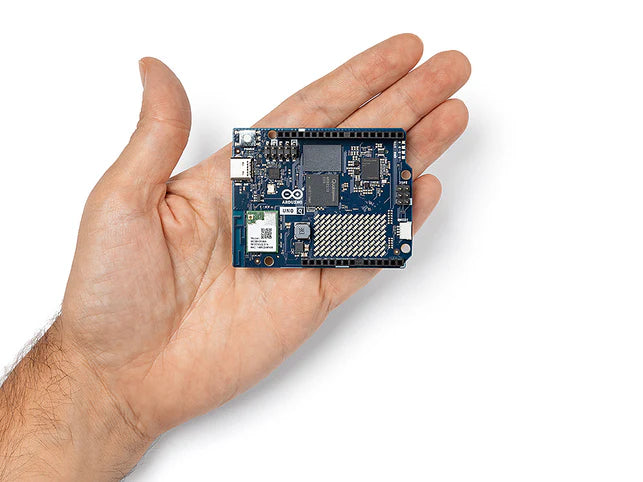
- Dimensions ~68.85 mm × 53.34 mm (UNO form factor)
Applications
Perfect for advanced projects that push beyond traditional microcontroller use:
- Edge AI, computer vision and audio-based recognition tasks
- IoT gateways, embedded Linux control and real-time sensors/actuators
- Rapid prototyping combining high-level Python or Linux workflow with low-latency MCU control
- Educational and professional systems that teach both embedded control and full operating-system development